




Chiba Medical J. 102E:1-12, 2026
doi:10.20776/S03035476-102E-1-P1
〔 Original Article 〕
Ryo Yamasaki, Kazuhiro Nogawa, Koichi Sakata
Kotaro Morita, Yuuka Watanabe, Sayaka Sakuma
Katsuyuki Ito, Chika Kumeda, and Yasushi Suwazono*
Department of Occupational and Environmental Medicine, Graduate School of Medicine, Chiba University, Chiba 260-8670.
*Contact information for the corresponding author.
(Received October 8, 2025, Accepted December 2, 2025, Published March 10, 2026.)
【Background】Japan’s rapidly aging population has led to an increase in older adults in the workforce, raising concerns about occupational accidents due to age-related declines inphysical and cognitive functions.
Objective: To investigate occupational differences in physical and cognitive function among middle-aged and older male workers and to examine how these differences relate to self-reported stumbling and falling accidents.
【Methods】
A total of 443 male workers aged 40-69 from the manufacturing, construction,and transportation industries between 2017 and 2024 were assessed. Physical and cognitive function was evaluated using standardized tests, including grip strength, chair stand, stepping, balance, and Trail Making Tests (TMTA, TMTB) . Logistic regression analyses were conducted to identify factors associated with stumbling and falling.
【Results】
Significant differences in physical and cognitive performance were observed across occupational groups. Manufacturing workers showed superior cognitive flexibility and construction workers showed superior grip strength, while transportation workers exhibited lower balance and agility. Stumbling was significantly associated with age ( odds ratio 1.04) ,exercise habits (odds ratio 1.68) , TMTA (odds ratio 1.01) , seated stepping test ( odds ratio 0.94) , and the TMTB (odds ratio 0.99) . Falling was significantly associated with age (odds ratio 1.09) , occupation (construction or manufacturing, odds ratio 2.41) , and exercise habits (odds ratio 2.55) , with additional contributions from stepping test performance and TMTA/TMTB scores.
【Conclusion】 Occupational differences in physical and cognitive function influence the risk of stumbling and falling among middle-aged and older workers. Developing and implementing industry-specific assessments are crucial for identifying at-risk individuals and providing targeted interventions.
middle-aged and older workers, stumbling, falling injury, physical function, cognitive function
Japan is facing an unprecedented rate of population aging, resulting in a substantial increase in the number of older adults in the workforce[1]. As the number of older workers increases, age-related declines in physical and cognitive function are expected to contribute to a higher incidence of occupational accidents.
Functional decline in those in groups with cognitive impairment, physical frailty, and both cognitive impairment and physical frailty was associated with falling without fractures, as compared with a robust group. In particular, the group with cognitive impairment and physical frailty had a significant association with fall-related fractures. Older people with cognitive impairment and physical frailty are considered to have a high risk of falling due to the combined risk, suggesting the importance of developing interventions to prevent falls in older adults[2]. Executive function plays a critical role in regulating gait, especially under complex and challenging conditions. Therefore,executive function deficits may contribute to an increased risk of falling[3]. Various studies have noted deterioration in gait performance under dual-task testing, predicting an increased risk of falls. This indicates that dual-task testing can be used in clinical practice to evaluate the role of cognition in preserving function and postural stability[4].
Since 2017, our team has conducted work-related interviews and comprehensive assessments, including cognitive and physical function tests, for workers aged 40 and older as part of health events and follow-up examinations at several companies. A survey has shown that workplace accidents are associated not only with physical decline but also with cognitive decline[5]. This survey included workers from various industries, such as manufacturing, construction, and transportation. However, it did not assess differences between industries. While some research[6] has focused on specific sectors (e.g. manufacturing alone or in comparison with other sectors) , to our knowledge there are no specific comparisons by industry, such as between manufacturing and construction or manufacturing and transportation. Furthermore, we know of no study to date that has examined the relationship between cognitive function and occupational accidents, such as falls and slips.Therefore, the present study aims to compare cognitive and physical function by industry, to examine whether these functions vary depending on the type of work, and to explore the relationship between industry type and the occurrence of fall and slip accidents.
Participants
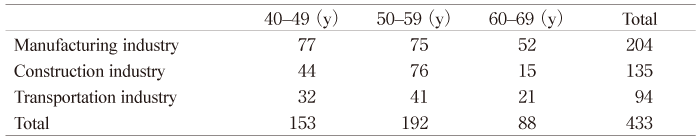
From a total of 1,171 individuals who participated in cognitive and physical function assessments between June 2017 and December 2024, a sample of 443 male workers aged 40 to 69 from the manufacturing, construction, and transportation industries was included in the analysis. Figure 1 illustrates the participant flow diagram. We included data from 433 individuals in the manufacturing (n = 204) , construction (n = 135) , and transportation (n = 94) industries (Table 1) .
Fig. 1 Flow diagram of individuals whose data were included.

Table 1 Number of participants
Measures
Physical function measurements included grip strength, repeated chair stand test, seated stepping test, one-leg standing with eyes closed, the Functional Reach Test (FRT) , Trail Making Test A and B (TMTA and TMTB) , and the 3-m Timed Up and Go test (TUG) . In selecting these assessment items, we aimed for a balanced evaluation of general physical functions such as upper and lower limb muscle strength, dynamic and static balance, and agility. In addition, based on our previous report[3], we included cognitive function assessments that have been noted to be associated with physical ability and fall risk in older adults. TMTA and TMTB were selected as measures of cognitive function based on a report[7] that states that the TMT can be a useful overall indicator in health programs designed to promote independence among elderly Japanese people, because it reflects complex gait performance. To ensure the feasibility of implementation even in workplaces without medical professionals, each assessment was chosen to be as general and simple as possible so that on-site staff could conduct them independently for future assessments.
Grip strength, an indicator of upper limb muscle strength, was assessed twice on each hand (four measurements in total) , and the average value was used. The repeated chair stand test, which evaluates lower limb strength, involved counting the number of sit-to-stand movements completed in 30 s[8]. This test has been particularly associated with extension strength of the lower limbs, such as the gluteus maximus, hamstrings, and plantar flexor muscles[9]. The seated stepping test assessed agility by counting the number of times participants could open and close their legs while seated in 20 s, and does not require any special equipment[10]. The one-leg standing test with eyes closed measured how many econds a participant could maintain balance on one leg with eyes closed, serving as an indicator of static balance. This test was measured on both legs, and the longer duration was used. The FRT measured the maximum forward reach distance (in cm) while maintaining balance from an upright position with arms extended forward, serving as an indicator of dynamic balance. It was measured twice, and the greater value was used. The TMTA measured the time required to sequentially connect randomly arranged numbers from 1 to 25 with lines, assessing attention, memory, and processing speed. The TMTB required participants to alternately connect numbers (1 to 13) and hiragana characters (“あ” to“ し”) in sequence (i.e., 1 → あ → 2 → い … 12 → し → 13) . While the TMTA primarily assesses visual search ability and motor speed, the TMTB additionally requires cognitive flexibility, making it a more complex measure of cognitive processing[11]. The TUG is a performance-based assessment that measures the time it takes for an individual to rise from a chair, walk 3 m, turn around a pole, return, and sit down again. It was developed in 1991 by Podsiadlo and Richardson as a comprehensive test to evaluate gait ability, dynamic balance, and agility[12]. Information on occupation, lifestyle habits, and experience of work-related accidents such as falls was collected through a self-administered questionnaire.Each questionnaire item was classified (Table 2) . The study measurements were mostly carried out by the coauthors themselves. Occasionally, the health checkup staff (not a coauthor) acted as the measurer. Regardless of who performed them, all measurements were taken with the same instruments and followed a standardized manual. The purpose was to minimize variability and reduce measurement error between different individuals.Because an actual stumbling or falling accident was considered to be relatively rare, we adopted recent subjective susceptibility of stumbling or falling as the indicator in the present study.
Table 2 Questionnaire and classification

Statistical analysis
A Kruskal-Wallis test was performed to examine differences between continuous variables in the manufacturing, construction, and transportation industries: age, grip strength, repeated sit-to-stand test, closed-eye one-leg standing test, FRT, seated stepping test, TUG, and TMTA and TMTB scores (Table 3) . Additionally, within each industry, that is, manufacturing (Table 4) , construction (Table 5) , and transportation (Table 6) , Mann-Whitney U tests were performed on the same variables to compare workers with and without self-noted stumbling, as well as those with and without falling incidents, based on questionnaire responses.
Of the 443 individuals included, data from 387 with complete data sets were included in the final analysis. Logistic regression analyses were conducted with “stumbling” and “falling” as dependent variables. The independent variables included age, grip strength, repeated sit-to-stand test, closed-eye one-leg standing test, FRT, seated stepping test, TUG, TMTA, TMTB scores, exercise habits, smoking status, alcohol consumption, and occupational category (Tables 7 and 8) . We considered differences with p < 0.05 as significant. All statistical analyses were performed using IBM SPSS Statistics for Windows (version 29) .
Table 3 Age and physical and cognitive function as grouped according to occupation
FRT, Functional Reach Test; TUG, 3-m Timed Up and Go test; TMTA, Trail Making Test A; TMTB, Trail Making Test B.
※ Manufacturing vs. Construction groups, p < 0.05
$ Manufacturing vs. Transportation groups, p < 0.05
# Construction vs. Transportation groups, p < 0.05
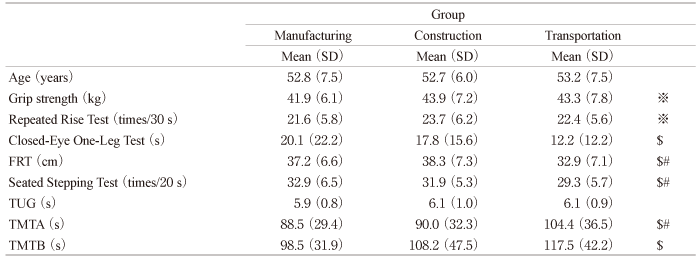
Table 4 Age and physical and cognitive functions grouped according to stumbling and falling within the manufacturing group
SD, standard deviation; FRT, Functional Reach Test; TUG, 3-m Timed Up and Go test; TMTA, Trail Making Test A; TMTB, Trail Making Test B; p-values by Mann-Whitney U test.
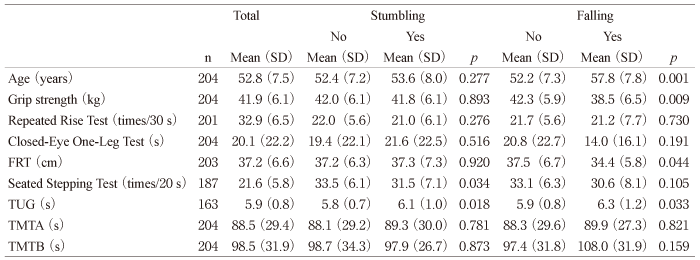
Table 5 Age and physical and cognitive functions grouped according to stumbling and falling within the construction group
SD, standard deviation; FRT, Functional Reach Test; TUG, 3-m Timed Up and Go test; TMTA, Trail Making Test A; TMTB, Trail Making Test B; p-values by Mann-Whitney U test.
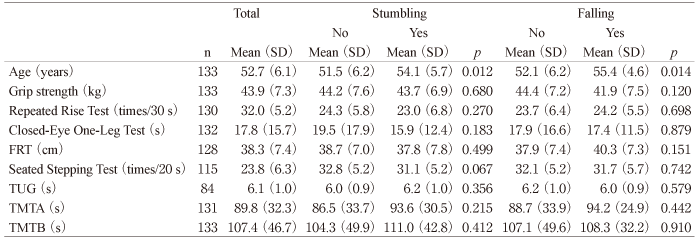
Table 6 Age and physical and cognitive functions grouped according to stumbling and falling within the transportation group
SD, standard deviation; FRT, Functional Reach Test; TMTA, Trail Making Test A; TMTB, Trail Making Test B;TUG, 3-m Timed Up and Go test; p-values by Mann-Whitney U test.

Table 7 Odds ratios and 95% confidence intervals for stumbling using logistic regression with model selection
OR, odds ratio; 95% CI, 95% confidence interval. Indicated covariates were selected using backward elimination methods; TMTA, Trail Making Test A; TMTB, Trail Making Test B.
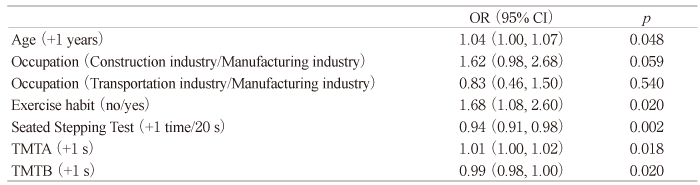
Table 8 Odds ratios and 95% confidence intervals for falling using logistic regression with model selection
OR, odds ratios; 95% CI, 95% confidence interval. Indicated covariates were selected using backward elimination methods

Differences were observed between the manu-facturing and construction groups in grip strength and the repeated sit-to-stand test results, with the construction group exhibiting significantly greater grip strength (mean 43.9 kg) and a higher number of repetitions in the sit-to-stand test (mean 23.7 times) . Significant differences were also identified between the manufacturing and transportation groups in results from the one-leg stance test with eyes closed, the FRT, the seated stepping test, and the TMTA and TMTB. Those in the manufacturing group has significantly better performance in the one-leg stance (mean 20.1 s) , FRT (mean 37.2 cm) , and seated stepping test (mean 32.9 repetitions) , along with significantly shorter completion times for the TMTA (88.5 s) and the TMTB (98.5 s) .Significant differences were also identified between the construction and transportation groups in results from the FRT, the seated stepping test, and the TMTA. The construction group had markedly superior outcomes in the FRT (mean 38.3 cm) and the seated stepping test (mean 31.9 repetitions) , as well as a notably reduced time to complete the TMTA (mean 90.0 s) (Table 3) . Subsequently, independent t tests were conducted within the manufacturing industry items to compare continuous variables between individuals in groups with and without self-noted stumbling. Significant differences were observed in the results from the seated stepping and TUG tests. Those in the group with a stumbling incident performed significantly fewer repetitions in the seated stepping test (mean 31.5) and took significantly longer to complete the TUG test (mean 6.1 s) compared with those from the group without a stumbling incident.
Significant differences were identified for age, grip strength, FRT, and TUG between individuals with and without a history of falls within the manufacturing group. Compared with those in the non-fall group, those in the fall group were considerably older (mean age 57.8 years) , had lower grip strength (mean 38.5 kg) , shorter FRT distances (mean 34.4 cm) and took longer to complete the TUG test (mean 6.3 s) (Table 4) .
For both self-noted stumbling and falling in those within the construction industry, a significant difference was observed only in age. Those in the stumbling group (mean 54.1 years) and the falling group (mean 55.4 years) were considerably older than their respective counterparts who did not report stumbling or falling (Table 5) .
For individuals within the transportation group, both those with and without self-reported stumbling or falling, significant differences were observed in the repeated chair stand test, the FRT, the TUG, and the TMTA results. Compared with those who did not report stumbling, those who did report stumbling performed significantly fewer repetitions in the chair stand test (mean 20.2) , had significantly shorter FRT distances (mean 30.2 cm) , and took significantly longer to complete both the TUG (mean 6.4 s) and TMTA (mean 116.6 s) . No significant differences were identified in any continuous variables between the fall and non-fall groups in the transportation industry (Table 6) .
Five variables were found to be statistically significantly associated with self-reported stumbling in logistic regression analyses: age (p = 0.048) , exercise habit (p = 0.020) , seated stepping test results (p = 0.002) , TMTA time (p = 0.018) , and TMTB time (p = 0.020) . Positive associations were observed for age (odds ratio (OR) 1.04; 95% confidence interval (CI) 1.00-1.07) , exercise habit (OR 1.68; 95% CI 1.08-2.60) , and TMTA time (OR 1.01; 95% CI 1.00-1.02) . Negative associations were identified for the number of repetitions in the seated stepping test (OR 0.94; 95% CI: 0.91-0.98) and the TMTB time (OR 0.99; 95% CI 0.98-1.00) (Table 7) .
We found three variables to be significantly associated with falling (Table 8) : age (p < 0.001) , occupation in construction or manufacturing (p = 0.016) , and exercise habit (p = 0.005) . Positive associations were observed for age (OR 1.09; 95% CI 1.04-1.15) , occupation in construction or manufacturing (OR 2.41; 95% CI 1.18-4.95) , and exercise habits (OR 2.55; 95% CI 1.33-4.89) .
This study examined, by occupation, whether work-related accidents involving the risk of stumbling or falling are associated with measures for physical and cognitive function, as well as various questionnaire items. Individuals who are older, frequently engaged in on-site work, experience high psychological stress, perform poorly on the seated stepping test, or complete TMTB in a shorter time are more prone to stumbling [5]. Additionally, older age, high psychological stress, lack of regular exercise, and smoking were associated with a higher risk of falling. However, the relationship between stumbling or falling accidents and physical or cognitive function measures, as well as questionnaire responses, has not yet been thoroughly investigated by occupation. Few studies have explicitly focused on occupational differences in this context.
Kono et al. [6] conducted a study comparing the results of physical function tests, including grip strength, sit-ups, trunk flexion, standing on one leg with eyes closed, whole-body reaction time, and maximum oxygen uptake, between manufacturing workers and those in other occupations. Except for those in their 50s, manufacturing workers had poorer grip strength. Manufacturing workers in their 40s and 50s performed better in sit-ups. There was no significant difference in trunk flexion between manufacturing workers and those in other occupations, whereas manufacturing workers across all age groups performed poorly for standing on one leg with eyes closed. There was no significant difference in whole-body reaction time among workers in their 50s, but manufacturing workers in their 40s performed worse. Manufacturing workers had better maximum oxygen uptake than those in other occupations. However, in that study, manufacturing was compared with a heterogeneous group of other occupations, thus not providing a pure occupational comparison.
Furthermore, cognitive function was not compared by occupation. In the present study, we compared physical and cognitive functions across industries, specifically manufacturing and construction, manufacturing and transportation, and construction and transportation. This detailed industry comparison revealed significant differences in cognitive and physical function by occupation.
Edwin et al. [13] conducted a large-scale Norwegian study involving over 7,000 participants, evaluating the level of cognitive stimulation associated with occupations from ages 30 to 60, and examined the risk of mild cognitive impairment (MCI) after age 70. They found that occupations involving low cognitive stimulation (e.g., cleaning and postal work) were associated with a 66% higher risk of cognitive impairment, whereas those involving high cognitive demand (e.g., teaching, management, law, and healthcare) were associated with a lower risk. Their results highlighted that occupations with low cognitive stimulation (e.g., cleaners, postal workers) had a 66% higher risk of cognitive impairment, whereas highly cognitively demanding professions (e.g., teachers, managers, lawyers, healthcare professionals) exhibited lower risk. It is well known that cognitive function varies across different occupations. In the present study, transportation workers outperformed manufacturing and construction workers on the TMTA time, while manufacturing workers outperformed transportation workers on the TMTB time. This finding suggests that occupational differences influence cognitive function. These and other studies confirm that differences in cognitive and physical function exist by occupations, as was also observed in the present study. Future research that expands this survey to other industries and explores the relationship between occupational accidents and cognitive and physical function will help to elucidate industry-specific characteristics. This strategy will ultimately facilitate more appropriate job placement that is tailored to individual capabilities.
Mann-Whitney U tests were conducted on continuous variables within the manufacturing group to compare the stumbling and non-stumbling groups. Significant differences were observed in both the Seated Stepping Test and the TUG test, with the stumbling group performing significantly worse than the non-stumbling group in both tests. Similarly, Mann-Whitney U tests comparing the falling and non-falling subgroups within the manufacturing group revealed significant differences in terms of age, grip strength, the FRT, and the TUG. The falling group was older and performed markedly worse than the non-falling group in terms of grip strength, the FRT, and the TUG. In the construction group, Mann-Whitney U tests comparing the stumbling and non-stumbling groups, as well as the falling and non-falling groups, highlighted a significant difference only in age. Both the stumbling and falling groups were considerably older than their respective non-incident counterparts. Finally, within the transportation industry, Mann-Whitney U tests highlighted significant differences between the stumbling and non-stumbling groups in the Repeated Rise Test, the FRT, the TUG, and the TMTA, with the stumbling group performing significantly worse. However, when comparing the falling and non-falling groups in the transportation group, no significant differences were observed.
It is believed that stumbling is influenced by the ability to perceive changes in floor level, as well as by the agility and functional capacity of the lower limbs required to respond appropriately.Yoshiko et al. [14] highlighted that a higher number of repetitions in the Seated Stepping Test was associated with superior lower limb strength and function, specifically knee extension and flexion strength. By contrast, Ikezoe et al.[15]investigated the relationship between multiple physical functions and falls among older women living in care facilities, as well as screening methods to effectively identify older adults at high risk of falling.They concluded that quadriceps muscle strength, FRT, the standing step test, and the chair stand test were significant predictors of falls among institutionalized older adults. However, the Seated Stepping Test was not identified as a significant factor. In the present study, associations were identified between the Seated Stepping Test and both stumbling and falling. This discrepancy may be due to differences in the study populations. Ikezoe et al. focused on participants with a mean age of 82 years[15], whereas the present study focused on men aged 40 to 69 years.
Yamamoto et al.[16]found that, among individuals aged 60 years and older, those who engaged in strength training at least twice a week exhibited significantly higher knee extension strength, indicating a correlation between exercise habits and lower limb strength. This result suggests a correlation between exercise habits and lower limb strength, which could help to prevent stumbling. Furthermore, a systematic review and meta-regression analysis by Sherrington et al. [17], based on 88 randomized controlled trials involving 19,478 community-dwelling older adults, noted that exercise reduced the incidence of falls by 21%. These findings support the association between exercise habits and a reduced risk of stumbling and falling. In the present study, the stumbling group was considerably older than the non-stumbling group and performed worse on TMTA. This finding may reflect a decline in cognitive function, including the inability to perceive small changes in floor level. When comparing the functional levels of individuals aged 55-59 with a baseline of individuals aged 20-24, significant declines occur in individuals in their late 50s. This decline encompasses sensory functions, such as vision and hearing, as well as physical functions, including balance, and cognitive functions, including learning ability and memory[18]. Similarly, Weerdesteyn et al.[19]compared neuromuscular responses to unexpected obstacles during treadmill walking between young and older adults. They identified that while the onset of muscle activation in young adults occurred at approximately 104-111 ms, older adults highlighted an average delay of about 10 ms and had lower obstacle avoidance rates. These findings suggest that aging leads not only to physical decline but also to cognitive decline, increasing the likelihood of stumbling even over small elevation changes.
Although TMTA performance was poorer in the stumbling group (as anticipated) , the stumbling group performed significantly better on TMTB compared with the non-stumbling group. Because TMTB requires higher-order cognitive functions than TMTA, it was initially expected that the stumbling group would also perform worse on TMTB. However, this inverse result aligns with findings from Smith, who conducted a 6-year prospective cohort study involving 906 community-dwelling older adults aged 65-69 years in Lausanne, Switzerland. Their study noted no significant differences in TMTA scores between fallers and non-fallers, but the group with the worst TMTB scores had significantly fewer noted minor falls. This has been interpreted as potentially reflecting compensatory behaviors, such as increased caution while walking[20]. Similar trends were observed in the present study, lending further support to these findings.
While the stumbling group performed worse on the TMTA (as expected) , they performed better on the TMTB. TMTB requires higher-order cognitive functions than TMTA, so it was expected that the stumbling group would perform worse on TMTB. However, the opposite result is in line with a previous report involving 906 community-dwelling older adults aged 65-69 years in Switzerland [20]. The study found that there were no major differences in TMTA scores between the groups that fell and those that did not. However, the group with the worst TMTB scores had significantly fewer minor falls. This finding suggests that they were more careful while walking. The same trends were seen in the present study, which supports these findings.
Regarding falling, significant differences were observed in three variables: age, occupation (construction vs. manufacturing) , and exercise habits. Those in the falling group were older, had fewer exercise habits, and construction workers were more likely to experience fallings compared to manufacturing workers. Although few studies have examined the causes of falls and fall-related accidents, Wang et al.[21] analyzed fall accidents at construction sites and they categorized the causes into organizational and human factors. As human factors, they identified low safety awareness, non-compliance with work procedures, and unqualified workers performing tasks at height as major contributors. However, that study did not account for individuals’ baseline cognitive or physical function. Hoon-Yong Yoon et al.[22] investigated fall rates by occupation in the United States and noted that during the three-year period from 1999 to 2001, the number of construction workers experiencing falls was the highest, with 38.3 to 40.0 cases per 10,000 workers. By contrast, in the manufacturing sector, the number of fall incidents was significantly lower, at 6.9 to 7.1 per 10,000 workers. The second-highest rate was identified in the transportation sector, with 21.0 to 24.8 cases per 10,000 workers. These findings are consistent with the present study, which also identified a significantly higher likelihood of falling among construction workers compared to those in manufacturing, suggesting that susceptibility to falls may differ depending on occupation.
Like stumbling, falling is likely influenced by the ability to perceive unstable or uneven surfaces, balance ability, lower limb agility, and overall lower limb function. Aging and a lack of regular exercise may lead to declines in perceptual function, balance, and agility, thereby increasing the likelihood of falls. However, in the present study, no significant occupational differences were observed in balance ability or lower limb agility, as assessed by the one-leg stance test with eyes closed and the seated stepping test. An increase in sample size is needed to confirm these findings.
A limitation of this study is the exclusion of data from female workers from the analysis. This exclusion was due to an insufficient number of female workers to achieve a statistically valid sample size. Future research to include data from female workers to investigate whether cognitive and physical functions, as well as lifestyle habits, vary by occupation and are linked to specific occupational injuries in this population is warranted.
This study is a cross-sectional study. In cross-sectional designs, it is difficult to determine the temporal sequence of events-whether declines in cognitive and physical function are causes of falls and falls from height, or whether such declines occur as a consequence of previous fall-related injuries. Therefore, it is considered necessary to extend this research to a longitudinal study that follows the same participants over time to observe changes in cognitive and physical function and the occurrence of falls or falls from height.
Occupational accidents are associated with not only cognitive and physical function and lifestyle habits but also with the type of occupation. Susceptibility to occupational accidents varies depending on occupation, cognitive and physical function, and lifestyle habits. Individuals at higher risk for occupational accidents can be identified by implementing assessment and questionnaire items specific to each industry. Providing targeted warnings and interventions for these individuals may effectively reduce the incidence of occupational accidents.
R.Y., K.M., K.S., K.N., S.S., C.K., K.I., and Y.S. conducted data collection; R.Y., K.S.,and K.M. provided data-bases for the research; R.Y., K.N., K.S., S.S., K.M., Y.W., and Y.S. drafted the plan for the data analyses; R.Y., and Y.S. conducted data analyses; R.Y. drafted the manuscript; and all authors were involved in interpretation of the results and revision of the manuscript and approved the final version of the manuscript. All authors have read and agreed to the published version of the manuscript.
This work was supported by JSPS KAKENHI Grant Number 22K11750 (Y.W.) and a grant from the Venture Business Laboratory, Chiba University. (K.N.) .
The authors declare that they have no competing interests. Y. S. is a member of the Editorial Board of the Chiba Medical Journal but was not involved in the review or acceptance of this paper.
Written informed consent was obtained from the individual to participate in the study. The study protocol was approved by the Ethics Review Board of the Graduate of Medicine, Chiba University (Approval No. M10792) .
This study’s data is available from the corresponding author upon reasonable request.
Address correspondence to Dr. Yasushi Suwazono.
Department of Occupational and Environmental Medicine,
Graduate School of Medicine, Chiba University, 1-8-1,
Inohana, Chuo-ku, Chiba 260-8670, Japan.
Phone: +81-43-226-2065.
Fax: +81-43-226-2066.
E-mail: suwa@faculty.chiba-u.jp
