




Chiba Medical J. 102E:53-61, 2026
doi:10.20776/S03035476-102E-3-P53
〔 Original Short Communication 〕
Tomokazu Murata1)*, Tomoko Kawasaki1) , Yoichi Hiramatsu1)
Tokiko Yoshida2) , Yusuke Nitta3) , and Fumiyo Oshima1)
1) Research Center for Child Mental Development, Chiba University, Chiba 260-8670.
2) Cognitive Behavioral Therapy Center, Chiba University Hospital, Chiba 260-8670 .
3) Institute of Applied Brain Sciences, Waseda University, Tokyo 162-0041 . *Contact information for the corresponding author.
(Received November 1, 2025, Accepted April 2, 2026, Published September 10, 2026.)
Schema therapy (ST) is a form of psychotherapy designed to treat patients with chronic personality difficulties. The therapeutic effectiveness of ST in chronic depression (CD) has been demonstrated in previous studies conducted outside Japan. However, to the best of our knowledge, no studies have examined changes in depression severity during short-term ST interventions for Japanese patients with CD. Therefore, this study investigated ST’s potential effects on Japanese patients with CD. The study was a single-arm pilot trial in which ST was administered over 20 weeks. The full analysis set (FAS) included eight participants based on the intention-to-treat principle; seven participants comprised the per-protocol set (PPS) . Assessments were conducted before, during, and after the intervention, and during follow-ups. Depression severity, measured by the Beck Depression Inventory-II (BDI-II) , was the primary outcome. Secondary outcomes included early maladaptive schemas, schema modes, attachment styles, and depressive symptoms, assessed using the Young Schema Questionnaire, Schema Mode Inventory, Experiences in Close Relationships-Relationship Structures, Patient Health Questionnaire-9, and Hamilton Rating Scale for Depression. Therapeutic alliance was the exploratory outcome, assessed using the Working Alliance Inventory-Short Form. The primary outcome significantly decreased from pre- to post-intervention (Cohen’s d = 0.956) after the intervention. Exploratory analyses suggested increases in therapeutic alliance scores, and at follow-up, schema-related measures showed decreases, and avoidance scores toward partners showed increases, with no other notable changes. This small, uncontrolled pilot study provides preliminary evidence of reductions in BDI-II scores during ST among Japanese patients with CD.
chronic depression, schema therapy, early maladaptive schemas, treatment effect, single-arm pilot trial
Chronic depression (CD) is a mental disorder characterized by depressive symptoms lasting more than two years[1]. Schema therapy (ST) , developed by Young, is a form of psychotherapy aimed at treating patients with chronic personality issues by focusing on early maladaptive schemas (EMS) [2]. EMS are self-defeating cognitive and emotional patterns formed when core emotional needs are unmet during early development and persist throughout life. Young et al. also described the concept of schema modes, which represent schemas and their associated effects activated at any given time[2]. They suggested that ST aims to enhance the Healthy Adult mode, which helps mitigate and repair the effects of dysfunctional modes. The therapeutic effectiveness of ST in treating CD has also been recognized[3,4]
According to Young et al. [2], ST is influenced by Bowlby’s attachment theory, which suggests that EMS are dysfunctional internal working models. Previous research has indicated that insecure attachment can reinforce EMS and exacerbate depressive symptoms [5]. However, it remains unclear whether addressing EMS through ST can improve attachment styles.
Attachment formation has also been shown to differ across cultures[6]. These cultural differences may influence the effectiveness of ST in addressing EMS and CD in Japan, potentially resulting in outcomes that differ from those of previous research.
Therapeutic alliance refers to the agreement on therapy tasks, goals, and the emotional bond between the patient and therapist [7]. Research has highlighted the importance of this alliance within ST[2,4]. A study conducted in the Netherlands implemented ST for up to 65 weeks in patients with chronic depression. The findings suggested that therapeutic alliance remained consistently high from the early stages of treatment, resulting in no significant increase throughout the intervention period[1]. However, to the best of our knowledge, no studies have examined changes in therapeutic alliance during shorter-term ST interventions for Japanese patients with chronic depression.
Therefore, in the present study, a preliminary singlearm pilot trial was conducted to examine the potential effects of schema therapy on Japanese patients with chronic depression. This study hypothesized that the Beck Depression Inventory-II (BDI-II) scores would decrease from pre- to post-intervention during ST among Japanese patients with CD. As a secondary objective, this study examined the changes in attachment styles during ST. As an exploratory objective, we also investigated whether ST interventions in Japan help form and strengthen therapeutic alliances with participants.
The methods of this study were as follows. Participants were recruited between April 2018 and March 2021 through clinical referrals and web advertisements. An a priori power analysis using G*Power, based on the effect size (g = 1.30) reported in a previous study[4], indicated a required sample size of 7 participants (α = 0.05, power = 0.80) . Considering a reported dropout rate of up to approximately 30% for cognitive behavioral therapy for people with depression in Japan[8], the target sample size was set at 10.
The inclusion criteria were as follows: (a) a primary diagnosis of major depressive disorder or persistent depressive disorder according to the Diagnostic and Statistical Manual of Mental Disorders, 5th edition (DSM-5) ; (b) undergoing pharmacotherapy for at least two years; (c) aged between 20 and 60 years; and (d) a score of over 14 on the Beck Depression Inventory- II (BDI-II) . The BDI-II score criterion was assessed during screening before informed consent was obtained. In addition, chronicity (≥ 2 years) was confirmed at enrollment, based on the clinical history obtained from participants and review of referral letters, which indicated that depressive symptoms persisted for at least two years. This pharmacotherapy criterion was included to identify patients with a clinically chronic course and was not intended to substitute for symptom duration confirmation. The exclusion criteria were as follows: (a) severe drug dependence, recurrent suicidal ideations, antisocial behaviors, and serious somatic conditions; (b) a score of 2 or higher on the BDI-II suicide ideation item, or a significant risk of suicide within one month of obtaining consent; (c) a diagnosis of bipolar I disorder, intellectual disability, autism spectrum disorder, or a neurocognitive disorder according to the DSM-5; and (d) a history of psychiatric inpatient treatment within six months prior to the registration date.
Eligibility and exclusion criteria were assessed at baseline based on referral information and diagnostic assessment. Comorbid psychiatric disorders were evaluated using the Mini-International Neuropsychiatric Interview (MINI) [9], whereas diagnoses not covered by the MINI, such as autism spectrum disorder, were assessed based on referral information.
All participants provided written informed consent, underwent screening, and were included at the screening stage (Supplementary File S1) . All participants met the inclusion criteria[9]. One participant requested to drop out, and another was mistakenly included despite being diagnosed with autism spectrum disorder. Although the target sample size was set at 10, to account for an anticipated dropout rate, recruitment progressed more slowly than expected, and the target sample size was not reached. Given that the required sample size, based on the power analysis (n = 7) , had been met after eight participants completed the intervention (excluding one dropout) , a decision was made to stop recruitment and proceed with the analysis. Therefore, following the intention-to-treat (ITT) principle[10], statistical analysis was conducted using the data, including the individual with autism spectrum disorder (N = 8) , as the FAS and excluding this data (N = 7) as the PPS. This paper discusses the results based on the FAS according to the ITT principle.
Participants attended 50-min ST sessions once a week for 20 weeks. The treatment followed the methods described by Young et al. [2] and Renner et al. [11]. The procedure began with an overview of schema concepts, followed by interventions using cognitive, experiential, and behavioral techniques. Additional details regarding the schema therapy protocol, therapists’ professional background, and treatment dose are provided in the Supplementary Materials (Supplementary File S2)
The ST sessions were conducted in the psychiatric outpatient department of Chiba University Hospital and the therapy room at Chiba University Graduate School of Medicine. Five therapists participated in the study, each having completed an international certification workshop for schema therapists taught by the last co-author, Oshima, an internationally certified advanced-level schema therapist. Additionally, each therapist received supervision from Oshima during the intervention. This study was approved by the Ethics Committee of Chiba University Graduate School of Medicine, and all participants voluntarily provided written informed consent before participating.
This study used the following scales. The BDIII, which is the primary outcome measure, assesses the severity of depressive symptoms[12]. Secondary outcome measures were as follows: The Young Schema Questionnaire (YSQ) assesses the strength of EMS [13], with higher scores reflecting stronger EMS. The Schema Mode Inventory (SMI) assesses schema modes, which are the states in which EMS are activated [14]. It includes 12 maladaptive and two adaptive schema modes. Higher scores indicate greater use of the respective modes. Experiences in Close Relationships-Relationship Structures (ECR-RS) assesses attachment styles toward fathers, mothers, partners, and friends [15], with subscales for avoidance (discomfort with intimacy) and anxiety (fear of abandonment) . Higher scores on each subscale reflect stronger feelings of avoidance and anxiety. The Patient Health Questionnaire-9 (PHQ-9) and the Hamilton Rating Scale for Depression (HAM-D) assess the severity of depressive symptoms[16,17]. The exploratory outcome, the Working Alliance Inventory-Short Form (WAI-SF) , assesses the strength of therapeutic alliance [18], with higher scores indicating stronger alliances.
Except for the HAM-D and WAI-SF, the questionnaires were administered at pre-ST (immediately before the first session) , mid-ST (week 10) , post-ST (week 20) , and follow-up (week 45) . HAM-D was administered at pre-ST, post-ST, and follow-up. The WAI-SF was administered at pre-, mid-, and post-ST. The BDI-II was re-administered immediately before the first schema therapy session, and the score was used as the pre-ST baseline for outcome analyses.
All participants completed all self-report measures (BDI-II, YSQ, SMI, ECR-RS, PHQ-9, and WAI-SF) . Clinician-rated measures included the HAM-D and the MINI. At baseline, the HAM-D and MINI were administered by the first author. At post-treatment and follow-up assessments, the HAM-D was administered by an outpatient nurse who was not involved in the ST delivery.
Given the pilot nature of the study and the small sample size, the primary analysis focused on the change in depressive symptoms measured by the BDI-II from pre-ST to post-ST (week 20) using a paired t-test. Analyses were conducted for the FAS and PPS to ensure result stability. Based on previous studies using the BDI-II [12], remission was defined as a post-ST BDI-II score of 0-13. Follow-up comparisons were conducted as exploratory analyses, whereas mid-ST data were only presented for descriptive purposes. Secondary outcome measures were analyzed using paired Student’s t-tests to assess changes from pre-ST to post-ST and followups using the FAS, and these analyses were considered exploratory. A 5% significance level was adopted for all statistical analyses. All analyses were performed using IBM SPSS Statistics version 28.
The results were as follows. Table 1 presents the demographic and clinical characteristics of the participants. No serious adverse events were observed during the intervention.
Table 2 presents the treatment effects on the primary, secondary, and exploratory outcome measures.
Regarding the primary outcome measure, the FASbased analysis indicated a statistically significant reduction in BDI-II scores from pre- to post-ST (p = 0.030) . Figure. 1 illustrates the individual-level changes in BDI-II scores across pre-ST, mid-ST, post-ST, and follow-up. During post-ST, five of the eight participants met the remission criterion. Mid-ST assessments were used to describe symptom trajectories over time.
As an exploratory analysis, changes in BDIII scores from pre-ST to follow-up were examined, and a significant decrease was observed (p = 0.023) . Regarding the secondary outcome measures, PHQ- 9 scores significantly decreased from pre- to post-ST (p = 0.022) . YSQ scores significantly decreased from pre-ST to follow-up (p = 0.022) . Maladaptive schema modes on the SMI significantly decreased from pre-ST to follow-up (p = 0.046) . ECR-RS-partner avoidance scores significantly increased from pre-ST to follow-up (p = 0.041) . No significant changes were observed in other measures.
Regarding the exploratory outcome measures, WAISF scores significantly increased from pre- to post-ST (p = 0.037) .
Table 1 Overview of the demographic and clinical characteristics of the sample
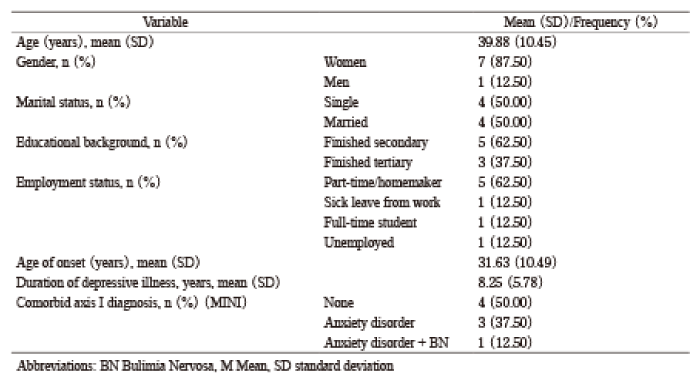
Table 2 Changes in outcome measure scores from pre- to mid-, post-ST, and follow-up assessments
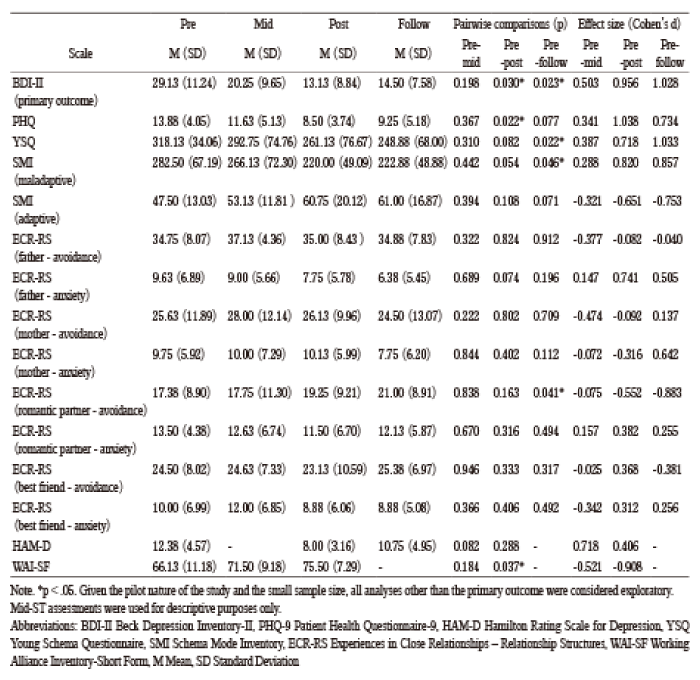
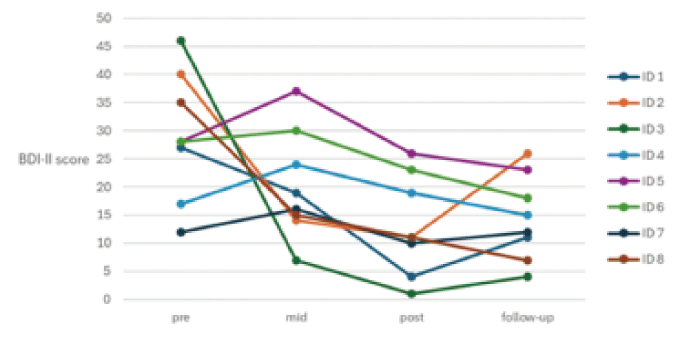
Fig. 1 Individual trajectories of BDI-II scores across treatment and follow-up
The PPS analysis did not show a significant difference in BDI-II scores from pre- to post-ST (pre-ST: M (SD) = 27.57 (11.18) , post-ST: M (SD) = 13.43 (9.50) , t (6) = 2.181, p = 0.072, 95% CI [-1.728, 30.014], Cohen’s d = 0.824, 95% CI[ -0.069, 1.670]) .
This section discusses the abovementioned results. This pilot study examined changes in depressive symptoms during ST among Japanese patients with CD. Changes in depressive symptom severity were the primary outcome, measured using the BDI-II, from preto post-intervention. Regarding the FAS, BDI-II scores indicated a statistically significant reduction over the intervention period. Conversely, regarding the PPS, the pre-post change did not reach statistical significance. However, the direction of the mean change in the PPS was consistent with that observed in the FAS, and the estimated effect size remained moderate-to-large. In addition to mean-level changes, the examination of individual-level trajectories of BDI-II scores indicated that several participants exhibited marked reductions in depressive symptoms over the course of ST, whereas others only exhibited limited symptom improvement. Consequently, at post-treatment, five of the eight participants were within the minimal symptom range (BDI-II score of 0-13) , whereas the remaining participants continued to report residual depressive symptoms. These individual differences may partly account for why statistical significance was observed in the FAS analysis but not in the PPS analysis. Thus, the trajectory plot and remission status suggested that symptom improvement during schema therapy was not uniform across participants. Given the small sample size and the limited statistical power, the absence of statistical significance in the PPS analysis should be interpreted as reflecting substantial uncertainty rather than evidence of no intervention-related change. Accordingly, the findings can be regarded as preliminary and hypothesis-generating, suggesting a potential improvement in depressive symptoms during ST that warrants replication in larger, adequately powered, controlled studies.
Exploratory follow-up assessments suggested decreases in EMS and maladaptive schema modes. Previous studies indicated that automatic thoughts function as depressive symptom mediators[19]. Automatic thoughts have also been shown to be relatively more accessible than schema-related constructs[2]. In addition, previous studies reported that improvements in depressive symptoms may occur before changes in EMS[3]. Within this theoretical framework, improvements in depressive symptoms may reflect changes at the automatic thoughts level, which may be associated with changes in schemarelated indicators. However, given that this study’s follow-up analyses were exploratory and the study was not designed to examine temporal or causal relationships between changes in symptoms and changes at the schema level, these hypothesis-generating interpretations require further investigation.
Regarding the secondary outcomes, decreases in EMS and maladaptive schema modes were observed during follow-ups. Conversely, no significant changes were detected in adaptive schema modes. To the best of our knowledge, although the effect of ST on adaptive schema in CD remains unclear, previous studies on personality disorders suggest these modes show less improvement than maladaptive schema modes[20]. Therefore, adaptive schema modes may be inherently more resistant to change than maladaptive schema modes.
Regarding the attachment-related outcomes, no significant changes were observed across most attachment dimensions, except for an increase in avoidance toward partners during follow-ups. Attachment-related findings should be interpreted as exploratory, given the study’s pilot nature and the limited sample size. Previous studies suggested that adult attachment styles were generally difficult to change and tended to exhibit relative stability over time[21]. Moreover, previous studies indicated that, compared with Western cultures, parent-child relationships in Japan are often characterized by overprotection, with caregivers anticipating and responding to needs that are not verbally articulated [22]. Such cultural communication patterns may influence how attachment-related changes emerge or are perceived during psychotherapy, particularly concerning short-term interventions.
Conversely, an increase in avoidance toward partners was observed during follow-ups. However, this may not reflect a deterioration in relational functioning. Previous studies suggested that although patients may initially lack awareness of their EMS and their origins, ST can heighten such awareness, which may lead to more negative perceptions of their parents [23]. Improvements in EMS may be accompanied by a re-evaluation of interpersonal relationships. Previous studies suggested that attachment styles in partner relationships were more susceptible to fluctuation than those in parent relationships [21]. Therefore, changes in attachment styles may be particularly evident in partner relationships. However, previous studies suggested that attachment styles were generally stable, and even if they fluctuated, such changes were typically temporary [21]. Therefore, the increase in avoidance toward partners may reflect a temporary change during therapy, rather than a stable shift in attachment style. However, given that this study was conducted with a small sample and comprised a short-term intervention, the findings were exploratory in nature, and their interpretations remain hypothesis-generating. Consequently, additional studies are required to clarify the course and clinical significance of attachment-related changes during ST.
Regarding exploratory process-related outcomes, therapeutic alliance scores increased throughout the intervention, which was consistent with previous findings [24]. Previous studies suggested the importance of therapeutic alliances in addressing traumatic experiences through imagery rescripting[25]. We hypothesized that the development of the alliance may be attributed to the fact that ST requires efforts to enhance the connection, trust, and positive evaluation between the therapist and the patient. However, given the exploratory nature of this analysis, the relationship between alliance development and symptom change could not be determined in this study.
This study has some limitations. First, the singlearm trial design and small sample size limit the generalizability of the findings. Second, an error in the participant selection process led to the inclusion of one individual who met the exclusion criteria, emphasizing the need for more rigorous screening procedures in future studies. Third, although exploratory followup assessments were conducted, they were limited to a relatively short time frame. Therefore, longer-term trajectories of symptoms and the risk of relapse could not be adequately examined. Future studies with larger samples, longer follow-up periods, and randomized controlled designs are required to address these limitations.
In conclusion, this pilot study suggested that depressive symptom scores decreased during ST among Japanese patients with CD; however, these findings should be interpreted cautiously, given the small sample size and uncontrolled design. Exploratory analyses indicated increases in therapeutic alliance scores and changes in schema-related indicators, as well as increased avoidant attachment toward partners. These preliminary observations require confirmation in larger, controlled studies. Additional studies, including adequately powered randomized controlled trials, are required to clarify the efficacy and mechanisms of ST for CD among the Japanese population.
TM and FO conceived and designed the experiments. TM, FO, TK, YH, and TY performed the therapy. YN analyzed the data. TM and YN wrote the paper.
This study was supported by research grants from the Japan Society for the Promotion of Science (JSPS) Grant-in-Aid for Research Activity Startup (KAKENHI) (Grant No. 17H06559; https://www.jsps.go.jp/english/index.html) . The funders had no role in the study design, data collection and analysis, decision to publish, or manuscript preparation.
The authors declare that they have no competing interests.
This study was approved by the Ethics Committee of Chiba University Graduate School of Medicine on April 10, 2018 (No. G29057) . The researchers explained the study’s aims and objectives to all participants. All participants voluntarily provided written informed consent before participating and understood that they could withdraw at any time and for any reason without penalty. This study was conducted in accordance with the Declaration of Helsinki and the Ethical Guidelines for Clinical Studies. This study was registered in the University Hospital Medical Information Network (UMIN) Clinical Trials Registry (No. UMIN000032427) .
Data generated or analyzed in the current study are available from the corresponding author upon request.
We are deeply grateful to the participants of this study. We also extend our gratitude to Dr. Eiji Shimizu for providing the location and opportunity to conduct this research as well as for his invaluable guidance.
Address correspondence to Dr. Tomokazu Murata.
Research Center for Child Mental Development,
Chiba University, 1-8-1 Inohana, Chuou-Ku, Chiba 260-8670, Japan.
Phone: +81-43-226-2975.
Fax: +81-43-226-8588.
E-mail: murata@chiba-u.jp
